

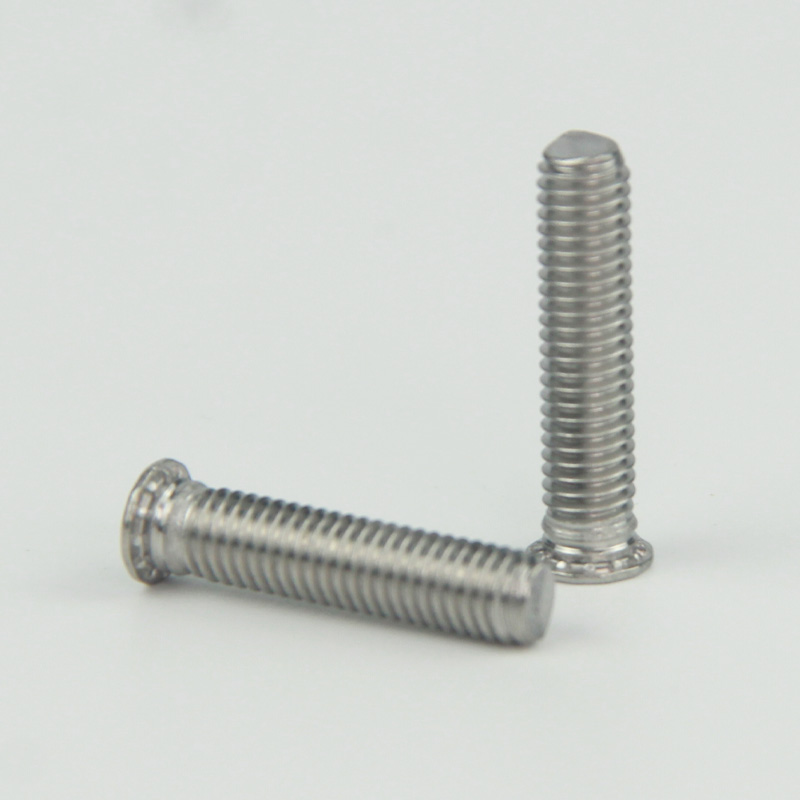
What are the general materials used in Clinching Screws?
1. Steel
Mild steel: They have better formability and have a little strength compare their price for the cost conscience uses.
Stainless steel: For example, A2 (304) or A4 (316) stainless steel, can offer better corrosion- resisting property and certain mechanical strength for application in food & medical & marine & etc.
2. Aluminum Alloys
Easily forge able lightweight for application where weight is a critical factor; for instance aerospace, electronics etc.
3. copper alloys
Such as brass, with good electrical conductivity and formability, used for connection applications requiring the electrical conductivity.
4. Titanium Alloys
This type has excellent mechanical characteristics that include high strength and low density, as well as good resistance to corrosion Suitable for aerospace and medical devices.
5. Engineering plastics
Like nylon and polycarbonate, for example, It is suitable for joining non-metallic materials, with insulating and chemically inert property.
6. Composite materials
An organic or inorganic material made of a metal or plastic matrix and reinforcing materials for particular high-performance uses.
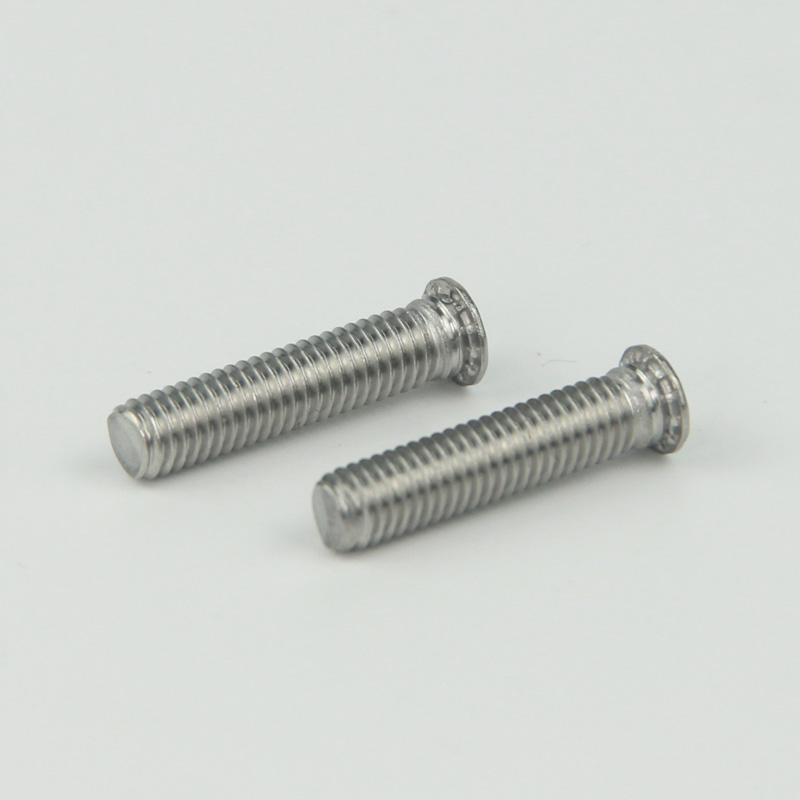
What factors do I need to consider when choosing the material for my Clinching Screw?
In selecting the material for Clinching Screws the formability, mechanical properties, corrosion resistance, heat treatability, cost, and the compatibility with the plate should be considered. For instant, stainless steel or mild steel may be ideal since they are affordable and durable and can be used if the plates to be joined are thin while aluminum alloys or titanium alloys will be more suitable for applications which require light weight and high corrosion resistance.
Also, the surface treatment of Stainless Steel Screws are also very crucial features. Some of the widely adopted surface treatments include plating (such as zinc, nickel), oxidizing treatment, phosphating treatment and coating to enhance the material’s corrosion and aesthetic properties.