

The commonly used grades are 302, 303, 304, and 305, which are the so-called "18-8" austenitic stainless steel grades. Both corrosion resistance and mechanical properties are similar. The starting point for selection is the production process method of fasteners, which depends on the size and shape of the fasteners, as well as the quantity of production.
303 type is used to improve cutting performance by adding a small amount of sulfur to 303 type stainless steel, which is used for machining nuts using bar materials.
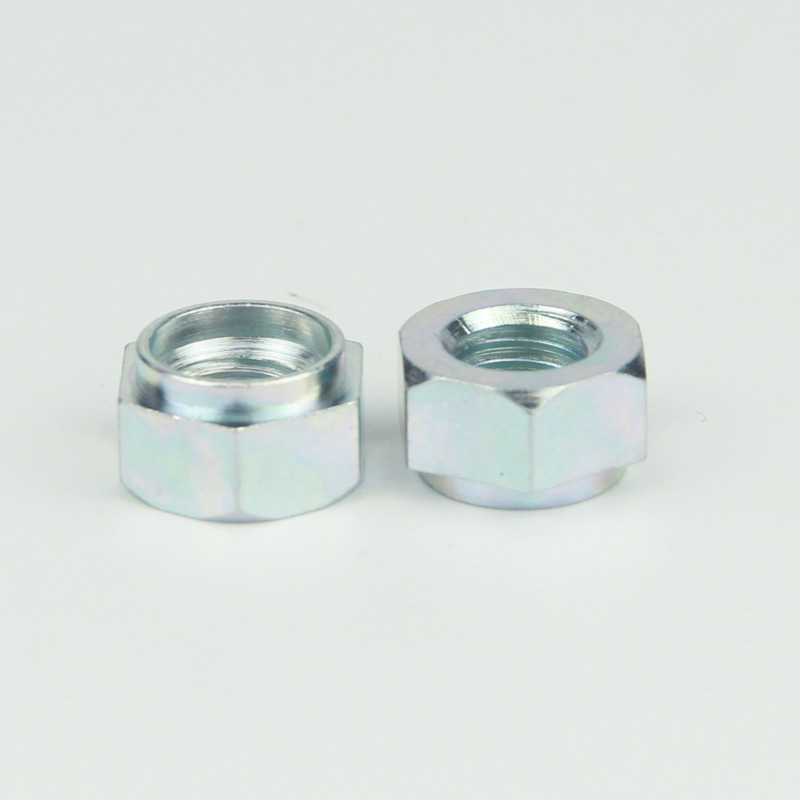
The 305 model is suitable for processing fasteners using cold heading technology, such as cold formed nuts and hexagonal bolts.
309 and 310 types have higher Cr and Ni content than 18-8 stainless steel, making them suitable for fasteners working at high temperatures.
321 type and 347 type, 321 type contains relatively stable alloy element Ti, and 347 type contains Nb, thereby improving the material's resistance to intergranular corrosion. Suitable for fasteners that are not annealed after welding or have been in service between 420 and 1013C.